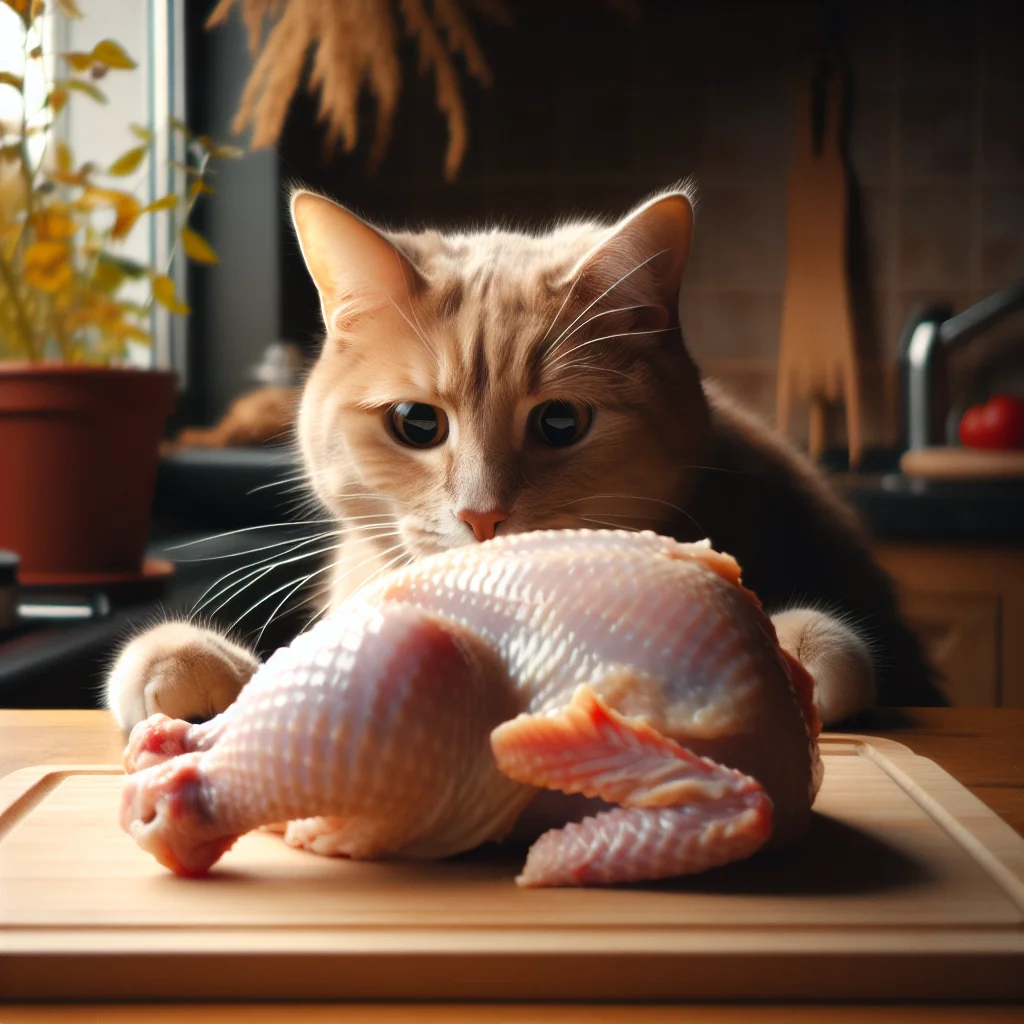
If you suspect your pet has ingested this food, do not wait for symptoms. Contact your veterinarian immediately.
Toxic/Caution Verdict: Raw chicken can be a potential health hazard for cats due to the risk of bacterial infections such as Salmonella and Campylobacter. These pathogens can cause severe gastrointestinal distress and other health issues in felines.
Is It Safe for Cats to Eat Raw Chicken?
Cats are obligate carnivores, meaning their diet naturally consists of meat. While raw chicken may seem like a natural fit, the risk of bacterial contamination makes it a cautious choice. Salmonella and Campylobacter are common bacteria found in raw poultry, which can lead to foodborne illnesses in cats. These bacteria can cause symptoms like vomiting, diarrhea, and fever. In severe cases, it may lead to dehydration and more serious health complications. It is crucial to ensure that any raw chicken fed to cats is sourced from reliable, quality-controlled suppliers and handled with strict hygiene measures to minimize risks.
What Are the Risks of Feeding Raw Chicken to Cats?
Feeding raw chicken to cats poses several risks primarily due to bacterial contamination. Cats may experience gastrointestinal issues, including vomiting and diarrhea, leading to dehydration. Infections with Salmonella can also result in systemic illnesses affecting other organs. Additionally, raw chicken bones can pose a choking hazard or cause internal injuries if ingested. Cats with compromised immune systems or underlying health conditions are particularly vulnerable to these risks. Owners must weigh these dangers against potential benefits before deciding to include raw chicken in their pet's diet.
How Can You Safely Feed Raw Chicken to Cats?
If you choose to feed your cat raw chicken, it is essential to take precautions to ensure their safety. Start by sourcing high-quality chicken from reputable suppliers who follow strict hygiene standards. Always store raw chicken at the correct temperature and avoid cross-contamination with other foods. It is advisable to consult with a veterinarian to tailor the raw diet to your cat's specific nutritional needs. Regular health checks can help monitor your cat's response to the diet and catch any potential health issues early.
What Are the Alternatives to Raw Chicken for Cats?
For those concerned about the risks of raw chicken, there are safer alternatives available. Commercially prepared raw diets often undergo processes such as freeze-drying or HPP (high-pressure processing) to eliminate harmful bacteria while maintaining nutritional value. Cooked chicken is another option, as cooking effectively kills bacteria without significantly compromising nutrient content. Additionally, high-quality commercial cat foods are formulated to meet all nutritional requirements, offering a convenient and safe alternative to raw feeding.
What Should You Do If Your Cat Eats Raw Chicken?
If your cat accidentally consumes raw chicken, monitor them closely for signs of gastrointestinal distress such as vomiting or diarrhea. If symptoms develop, seek veterinary advice promptly. Ensure your cat stays hydrated and observe them for any changes in behavior or appetite. In cases of severe or prolonged symptoms, a veterinary visit is necessary to rule out more serious conditions or infections. A proactive approach can help mitigate potential health impacts.
Toxicity Levels
| Type | Amount | Risk |
|---|---|---|
| Raw Chicken | Small | Low |
| Raw Chicken | Moderate | Moderate |
| Raw Chicken | Large | High |
| Cooked Chicken | Small | Low |
| Processed Raw Diet | Any | Low |
Symptoms to Watch For
- Vomiting
- Diarrhea
- Fever
- Dehydration
- Lethargy
Frequently Asked Questions
Can raw chicken cause salmonella in cats?
Is cooked chicken safer for cats than raw chicken?
How can I tell if my cat has a bacterial infection from raw chicken?
Are there any nutritional benefits to feeding raw chicken to cats?
What should I do if my cat is showing symptoms of food poisoning?