
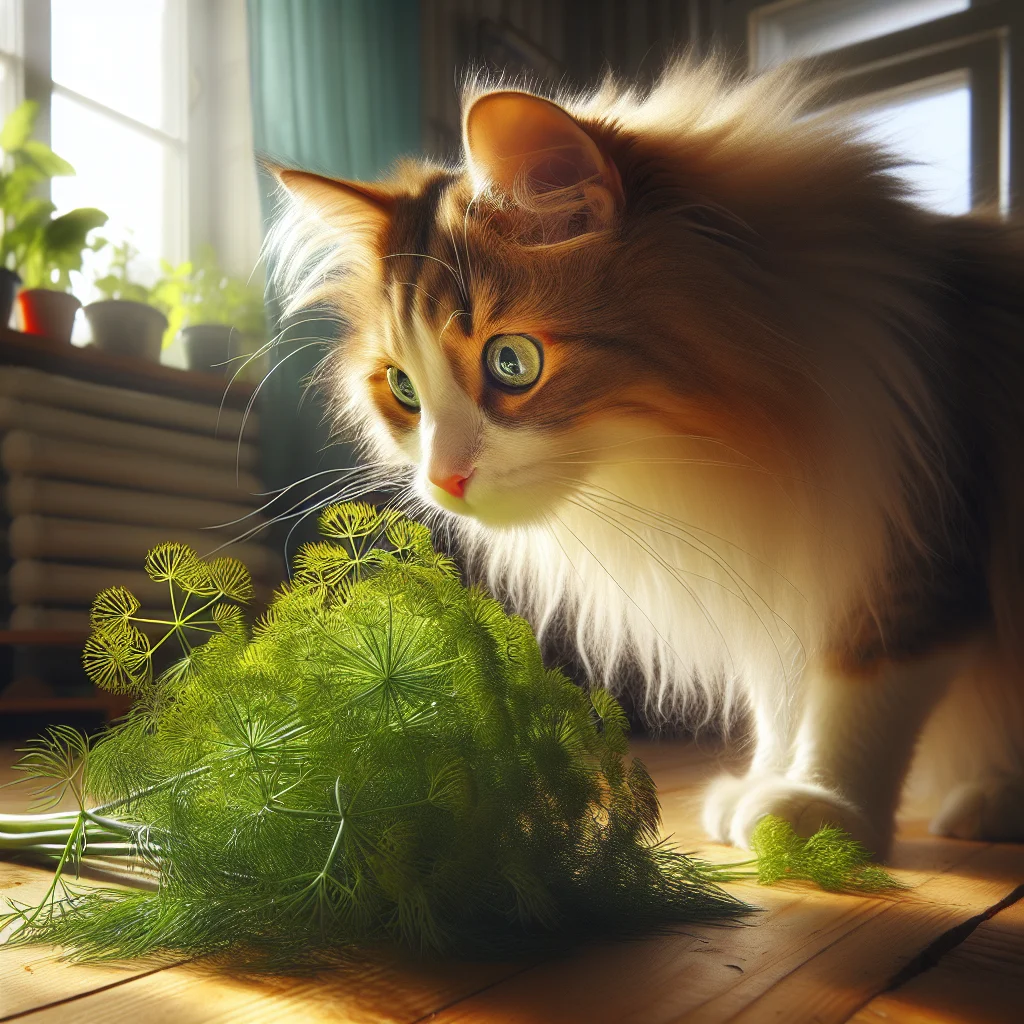
Safe. Dill is generally safe for cats to consume in small quantities. Unlike many other herbs, dill does not contain harmful compounds that could negatively affect your feline friend. Instead, it offers some benefits that can be a healthy addition to your cat's diet in moderation.
What are the Benefits of Dill for Cats?
Dill contains essential vitamins and antioxidants that can support your cat's overall health. Vitamins A and C, present in dill, help boost the immune system and promote good vision. Additionally, dill's antioxidants combat free radicals, potentially reducing the risk of chronic diseases. The herb's mild anti-inflammatory properties may also soothe digestive upsets, making it a natural remedy for cats with sensitive stomachs.
How Should I Introduce Dill to My Cat's Diet?
Introducing dill to your cat's diet should be done gradually. Start by offering a small amount, finely chopped, mixed into their regular food. Observe your cat for any adverse reactions. If your cat seems to tolerate dill well, you can continue to offer it as an occasional treat. However, always ensure that dill is fresh and free from pesticides before serving.
Are There Any Risks Associated with Feeding Dill to Cats?
While dill is safe, overconsumption can lead to digestive upset. Cats have sensitive stomachs, and even safe herbs can cause issues if not given in moderation. Symptoms of overconsumption might include mild gastrointestinal discomfort or diarrhea. Always monitor your cat when introducing any new food into their diet.
Why Might My Cat Be Attracted to Dill?
Cats are naturally curious creatures, and the scent of dill might be intriguing to them. Dill's aroma is strong yet pleasant, which might draw your cat's attention. Some cats may even enjoy the texture of fresh dill leaves, leading them to nibble on it out of curiosity.
Can Other Pets Eat Dill Safely?
Like cats, many other household pets such as dogs and rabbits can safely consume dill in moderation. However, it's always a good idea to research specific dietary needs and restrictions for each animal species. Consult with a veterinarian if you have concerns about feeding dill to other pets in your household.
Toxicity Levels
| Type | Amount | Risk |
|---|---|---|
| Fresh Dill | Small Pinch | Low |
| Fresh Dill | Moderate | Medium |
| Dill Essential Oil | Any | High |
| Dill Seeds | Small Pinch | Low |
| Dill Seeds | Moderate | Medium |
Symptoms to Watch For
- Vomiting
- Diarrhea
- Lethargy
- Loss of Appetite
- Gastrointestinal Discomfort
Frequently Asked Questions
Is dill safe for cats?
How much dill can I give to my cat?
Can dill help my cat's digestion?
Are there any side effects of dill for cats?
Can dill be used as a treatment for hairballs in cats?