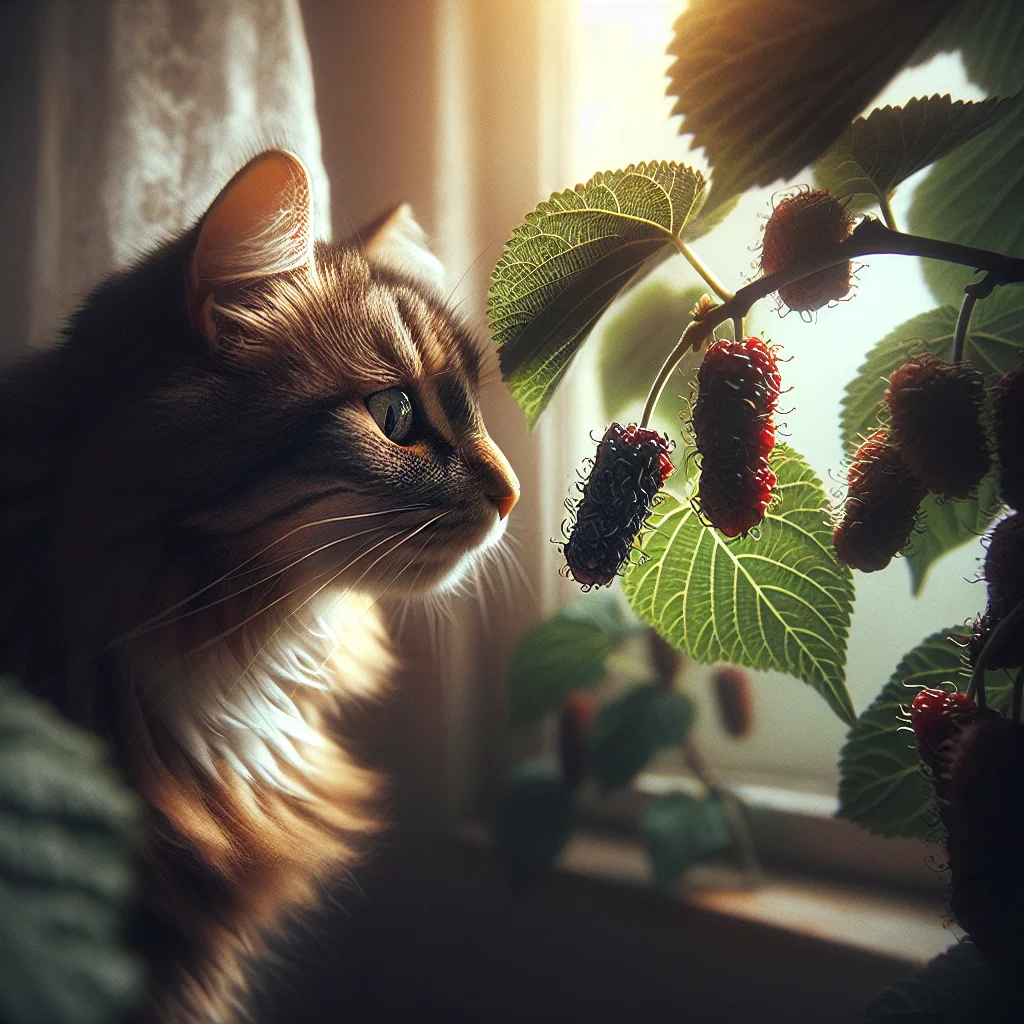
Safe: Mulberries are non-toxic to cats. While many fruits pose a risk to our feline companions, mulberries are among those that are considered safe. With no harmful substances found in this berry, it’s a delightful treat that can be given cautiously to your cat. The scientific mechanism behind this safety lies in the absence of compounds like cyanogenic glycosides or oxalates, which are present in some other fruits and can be harmful to cats. Instead, mulberries offer a range of beneficial nutrients without posing a risk of toxicity.
Can Cats Have Mulberry in Their Diet?
While mulberries are safe for cats, they should not form a significant part of their diet. Cats are obligate carnivores, meaning their diet primarily consists of meat. Fruits like mulberries can occasionally be added as a treat but should not replace their regular food. The high fiber content in mulberries can aid digestion, but too much can lead to gastrointestinal upset. It is always advised to introduce any new food item slowly and watch for any adverse reactions. A few pieces of ripe mulberries given as a treat should suffice. Always ensure that the fruit is fresh and clean before offering it to your cat.
What Benefits Do Mulberries Offer to Cats?
Mulberries are rich in vitamins and minerals which can be beneficial to cats when given in moderation. They contain Vitamin C and Vitamin K, both of which can support overall health. Additionally, they are high in antioxidants, which help combat free radicals in the body. While cats do not require Vitamin C from their diet as they produce it naturally, the extra boost from mulberries can contribute to their immune system. The fiber content can also aid in maintaining a healthy digestive system, reducing the risk of constipation. However, these benefits are most effective when mulberries are given as a treat, not as a staple food.
How Should You Serve Mulberries to Cats?
Always serve mulberries to your cat in moderation. Wash them thoroughly to remove any pesticides or chemicals. It’s best to serve them fresh and ripe, as unripe berries can be harder to digest. You can mash them slightly to make them easier for your cat to eat or cut them into small pieces to prevent choking hazards. Avoid offering dried mulberries, as they may contain added sugars that are not suitable for cats. Monitoring your cat's reaction after introducing mulberries for the first time is crucial to ensure they don’t experience any digestive issues.
Are There Any Risks Associated with Mulberries for Cats?
While mulberries are safe, there are potential risks if consumed in large quantities. Overconsumption can lead to an upset stomach or diarrhea due to their high fiber content. Additionally, if your cat has never eaten fruits before, sudden introduction might cause vomiting or changes in stool consistency. Always start with small amounts and observe your cat’s reaction. If your cat shows signs of discomfort or allergic reactions such as itching or swelling, discontinue feeding and consult your veterinarian. It’s also important to avoid giving your cat mulberries that have been treated with pesticides.
Toxicity Levels
| Type | Amount | Risk |
|---|---|---|
| Fresh Mulberries | 5-6 berries | Low |
| Unripe Mulberries | Any | Moderate |
| Dried Mulberries | Any | Moderate |
| Large Quantities | Over 10 berries | High |
| With Pesticides | Any | High |
Symptoms to Watch For
- Vomiting
- Diarrhea
- Stomach upset
- Itching
- Swelling
Frequently Asked Questions
Can cats eat mulberries?
How often can I give my cat mulberries?
Are there any side effects of mulberries for cats?
Can kittens eat mulberries?
What other fruits are safe for cats?